105m
Read
25,000
Words
10
Chapters
Emotional Intelligence
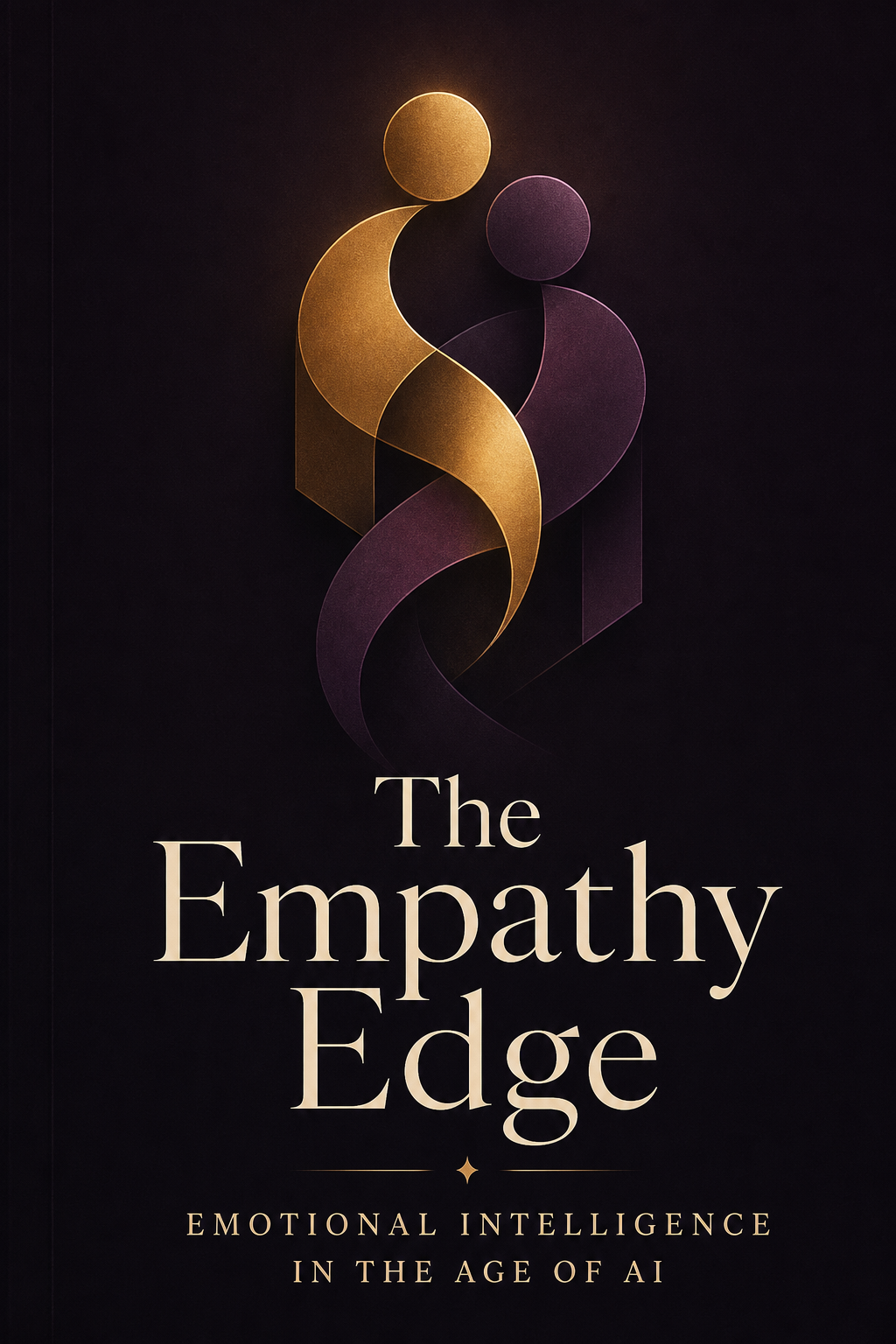
The Empathy Edge
Emotional Intelligence in the Age of AI
As machines absorb more of what we used to call skilled work, the rarest and most valuable human abilities are not technical at all. They are emotional: the capacity to read a room, to sit with someone in difficulty, to build trust that no interface can fake. The Empathy Edge makes the case that emotional intelligence is not a soft skill but the hard currency of the coming decade — and, crucially, that it can be developed at any age. In under two hours you will learn to perceive emotion more accurately, regulate your own reactions, and connect with others in a way that becomes your enduring competitive advantage precisely because it cannot be automated.
A full-length business book takes ~5 hours. This one respects your time.
What’s inside
Every chapter is engineered to be read in one sitting.
A focused 9-minute chapter. You will finish it understanding not just what to do, but why it works — and the single highest-leverage move to make first.
Read the first pages, free
For a generation we told young people the same thing: learn to code, chase the technical, automate or be automated. It was reasonable advice for its moment. It is now, quietly, becoming obsolete — because the machines have learned to code too, and they do not sleep.
As artificial intelligence swallows one 'skilled' task after another, a strange inversion is underway. The abilities we dismissed as soft — reading a room, calming a frightened colleague, earning trust that survives a mistake — are turning out to be the hardest to replicate and the most valuable to possess. Empathy, it turns out, is the last human advantage, and it is not going anywhere.
This is not sentimental. It is strategic. A machine can draft the email, but it cannot sense that the person receiving it is one bad message away from quitting. A model can summarize the meeting, but it cannot feel the unspoken tension that means the real decision will be made afterward, in the hallway. The people who can do those things — perceive, regulate, connect — will be the ones others cannot do without, in every field, at every level.
The encouraging part is that emotional intelligence is not fixed. For years it was treated like height: you had your allotment and that was that. The research tells a different story. EQ is a set of learnable capacities — self-awareness, self-regulation, empathy, and skilled connection — and like any capacity, it grows with deliberate practice. The forty-year-old who decides to get better at reading people will, in a year, be measurably better at reading people. Biology permits it. Most of us simply never train.
We will train. This book treats emotional intelligence the way a good coach treats an athlete’s craft: as something to be understood, drilled, and refined. We begin with what emotions actually are — not noise to be suppressed, but fast, ancient information about what matters to us and to others. Misread the data and you react badly; read it well and you gain a kind of sight most people lack.
From there we build inward before we build outward. Self-awareness comes first, because you cannot manage what you cannot notice, and you cannot read others accurately while blind to the storm in yourself. Then regulation — the ability to feel something strongly and still choose your response, especially under the pressures that make everyone else say the thing they regret.
Only then do we turn to other people: perceiving what they feel, navigating the conversations most of us avoid, and offering genuine empathy without dissolving into everyone else’s emotions until nothing is left of your own. Empathy without boundaries is not virtue; it is burnout with good intentions, and we will build the boundaries in.
We close where it counts — leadership, and connection in a world increasingly mediated by screens that were engineered to capture attention rather than deepen it. By the end you will have a practice, not just a theory: a set of habits that compound quietly until, one day, people describe you as someone who simply gets it. That reputation is not a personality. It is a skill you built. Let’s begin building it.
Keep reading — unlock the full micro-book instantly.
Reader reviews
132 reviews
All reviews · 5
Exactly what I needed
Read it on a single flight and walked off with three things I actually changed the next day. No filler, no padding — just signal.
— Marcus T.
Finally, a book that respects my time
I never finish long non-fiction. Finished this in one sitting and immediately recommended it to two friends.
— Priya S.
Sharp and practical
Loses nothing by being short. A couple of sections I wanted more depth on, but the core argument lands hard.
— David L.
Punches way above its length
More useful than the 400-page bestseller I gave up on last month. Beautifully written too.
— Elena R.
Great value
For the price and the time, this is a steal. Clear, well-argued, and I actually remember what I read.
— James K.
Readers also bought
Mental Resilience
Unbreakable Mind
Building Mental Resilience That Lasts
Science of Living Longer
The Longevity Code
The New Science of Living Longer
AI & Society
The Algorithm Within
Navigating AI Ethics in a Human World
Biohacking & Longevity
Biohack Your Biology
The Science of Optimizing Your Body