85m
Read
20,000
Words
10
Chapters
Mental Resilience
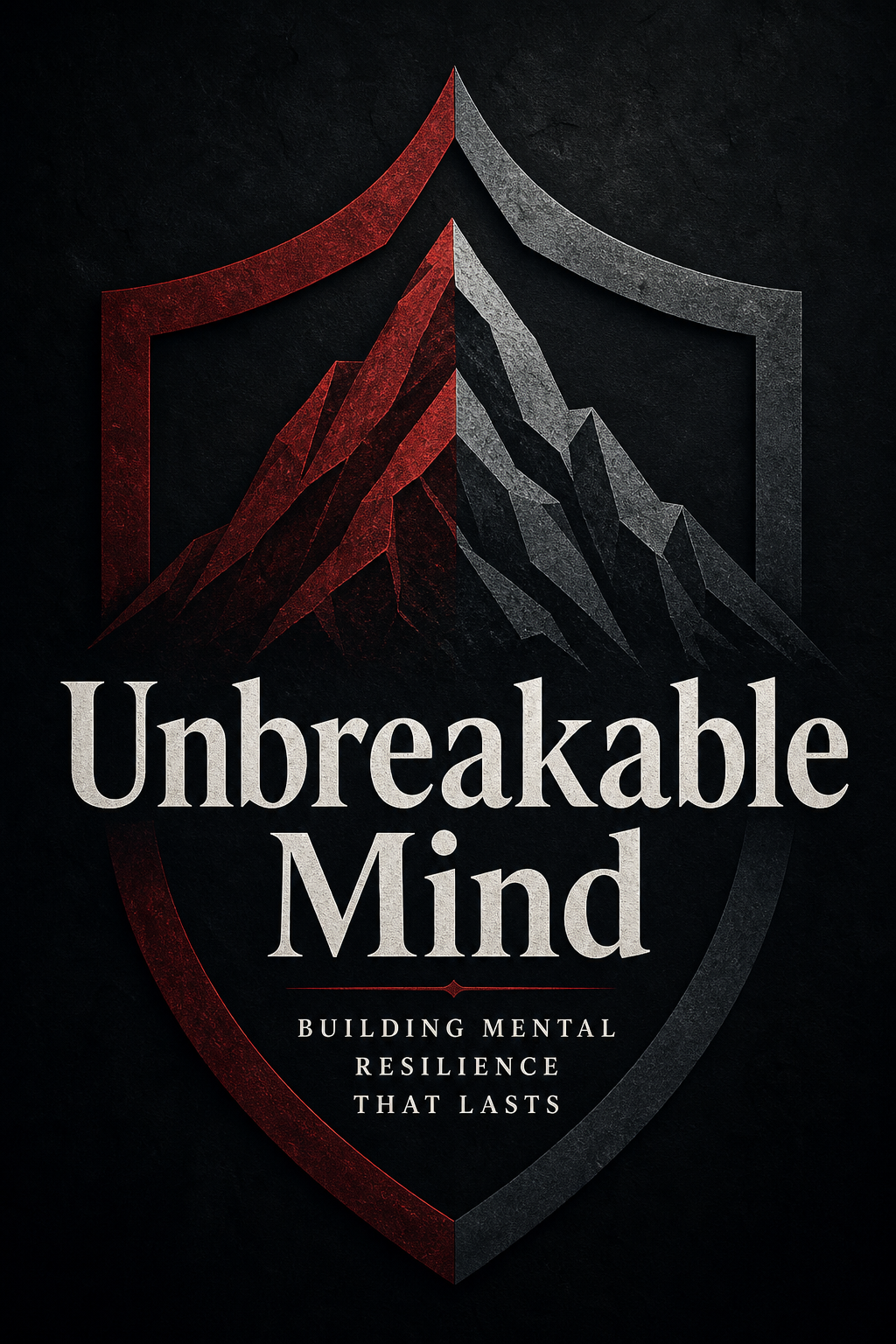
Unbreakable Mind
Building Mental Resilience That Lasts
Resilience is not a personality trait you are born with or without. It is a set of skills, and skills can be trained. Unbreakable Mind shows you exactly how. Drawing on cognitive science, performance psychology, and the hard-won wisdom of people who have endured genuine adversity, this micro-book reframes stress, failure, and fear as information rather than threat — and hands you the practices to respond instead of react. In 85 minutes you will build a personal operating system for hard days: how to steady yourself in the moment, recover faster afterward, and grow stronger from the very pressures that used to flatten you.
A full-length business book takes ~5 hours. This one respects your time.
What’s inside
Every chapter is engineered to be read in one sitting.
A focused 8-minute chapter. You will finish it understanding not just what to do, but why it works — and the single highest-leverage move to make first.
Read the first pages, free
We talk about resilient people as though they were made of different material — tougher, calmer, somehow immune to the fear and doubt that flatten the rest of us. It is a flattering story for them and a discouraging one for everyone else, and it happens to be false.
The people who handle pressure well are not feeling less. In many cases they are feeling exactly what you feel: the tight chest, the racing thoughts, the urge to run or freeze. The difference is not the presence of the storm. It is what they do in the narrow, precious gap between the storm arriving and their response to it.
That gap is the whole game. And the good news — the genuinely liberating news — is that the gap can be widened, and what you do inside it can be trained. Resilience is not a gift handed out at birth. It is a skill, built the way all skills are built: through understanding, practice, and repetition until the new response becomes the automatic one.
This book is a training manual for that skill. It does not ask you to think positively, to pretend you are fine, or to be grateful for your suffering. Toxic positivity is just denial in a nicer outfit, and denial is fragile. Instead, we are going to do something harder and far more durable: we are going to learn to look difficulty in the face and stay functional anyway.
We begin by taking apart the stress response itself. That surge of adrenaline you have been taught to fear is not a malfunction — it is a two-hundred-thousand-year-old performance-enhancement system, and once you understand what it is actually for, it stops feeling like an enemy and starts feeling like fuel. A single reframe here, backed by solid research, can change how your body interprets pressure for the rest of your life.
From there we move into the gap. You will learn to notice the moment of activation earlier, to interrupt the automatic spiral, and to choose a response on purpose. We will practice talking to yourself deliberately instead of being narrated by whatever fear happens to grab the microphone. We will use the breath and the body — the fastest, most reliable levers you have — to bring a racing system back under command in under two minutes.
Then we widen the lens. Resilience is not only about surviving the acute moment; it is about recovering well afterward, failing in a way that teaches rather than crushes, and building the relationships and the sense of meaning that act as armor long before trouble arrives. The strongest people are not the most isolated. They are the best supported, and they built that support on purpose.
By the end you will have assembled your own resilience practice — a short, personal set of tools you can reach for on the worst days, when thinking clearly is hardest and reaching for the right tool matters most. You do not need to be born unbreakable. You need to train. Let’s start.
Keep reading — unlock the full micro-book instantly.
Reader reviews
287 reviews
All reviews · 4
Exactly what I needed
Read it on a single flight and walked off with three things I actually changed the next day. No filler, no padding — just signal.
— Marcus T.
Finally, a book that respects my time
I never finish long non-fiction. Finished this in one sitting and immediately recommended it to two friends.
— Priya S.
Sharp and practical
Loses nothing by being short. A couple of sections I wanted more depth on, but the core argument lands hard.
— David L.
Punches way above its length
More useful than the 400-page bestseller I gave up on last month. Beautifully written too.
— Elena R.
Readers also bought
Science of Living Longer
The Longevity Code
The New Science of Living Longer
AI & Society
The Algorithm Within
Navigating AI Ethics in a Human World
Emotional Intelligence
The Empathy Edge
Emotional Intelligence in the Age of AI
Biohacking & Longevity
Biohack Your Biology
The Science of Optimizing Your Body